
Amount vs Number: 5 Simple Choices for Clear Sentences
For amount vs number, check the noun after of. Use amount with uncountable nouns such as money, water and time. Use number with plural countable nouns such as coins, bottles and hours. The noun determines the choice.
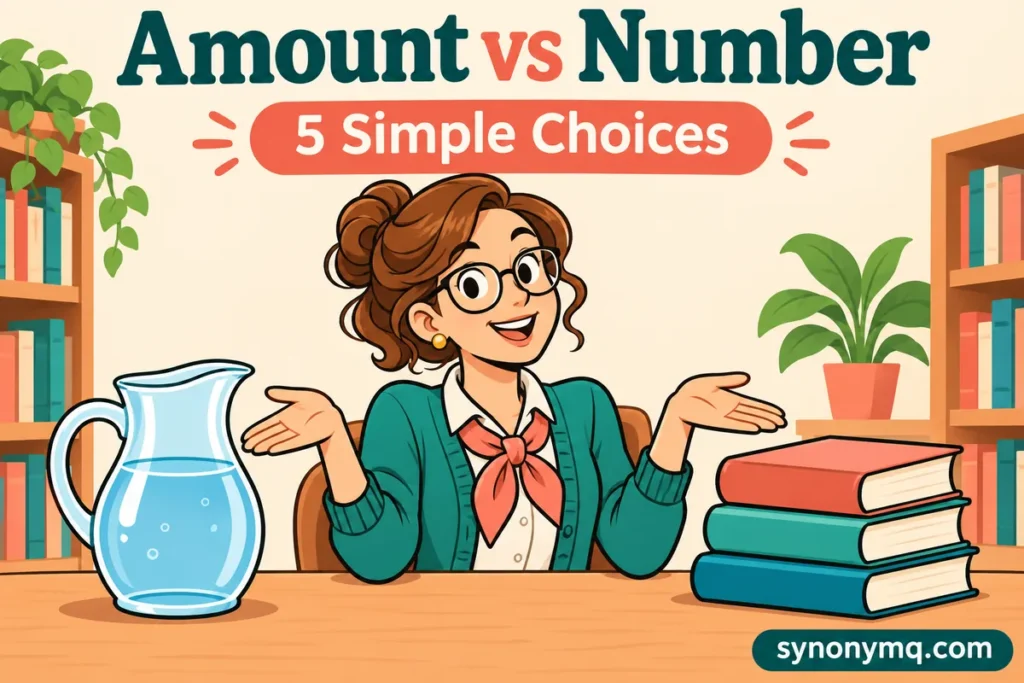
Amount vs number starts with the noun
Try putting three directly before the noun. Three chairs sounds natural; three furniture does not. That gives you the number of chairs but the amount of furniture.
This is a grammar test, not a test of whether you could count the objects in real life. A room’s furniture may consist of just a desk and two chairs. The word furniture is still uncountable in that sentence.
BBC Learning English’s explanation makes this noun-based distinction using familiar countable and uncountable words.
| Noun in your sentence | Use this phrase | What it describes |
|---|---|---|
| money | amount of money | A sum |
| coins | number of coins | Individual pieces |
| time | amount of time | Duration |
| hours | number of hours | Counted units of duration |
| people | number of people | Individuals |
| traffic | amount of traffic | Traffic considered as a whole |
| vehicles | number of vehicles | Separate cars, buses or other vehicles |
Five everyday choices that settle the sentence
1. Money or coins?
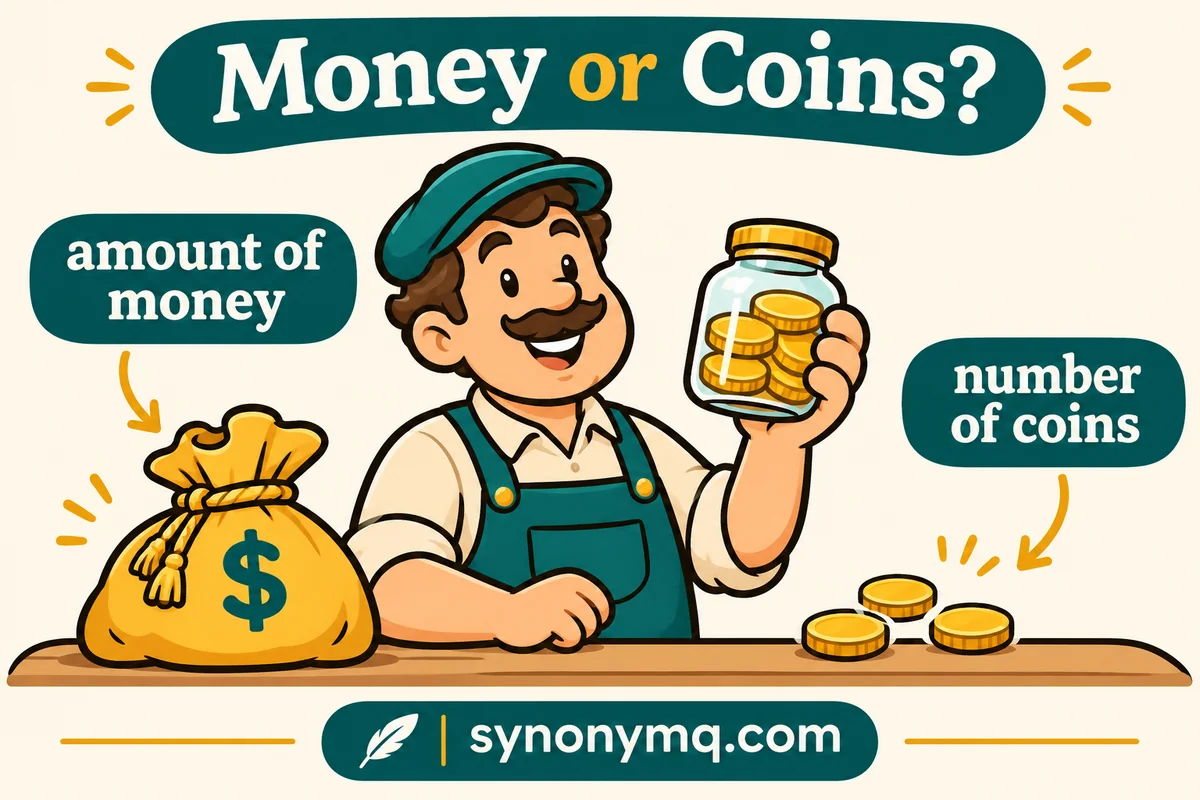
Choose amount of money when you mean a sum. Choose number of coins when you mean how many individual coins there are. Counting cash does not make the noun money countable.
Sum: “The amount of money in the donation box surprised us.”
Count: “The number of coins made the box difficult to lift.”
Those sentences ask different questions. Two boxes could hold the same number of coins but different amounts of money if the coins have different values.
If you know the total, an exact figure may be clearer: “The box contained £84.” You do not have to use amount simply because the subject is money.
2. Time, hours or times?
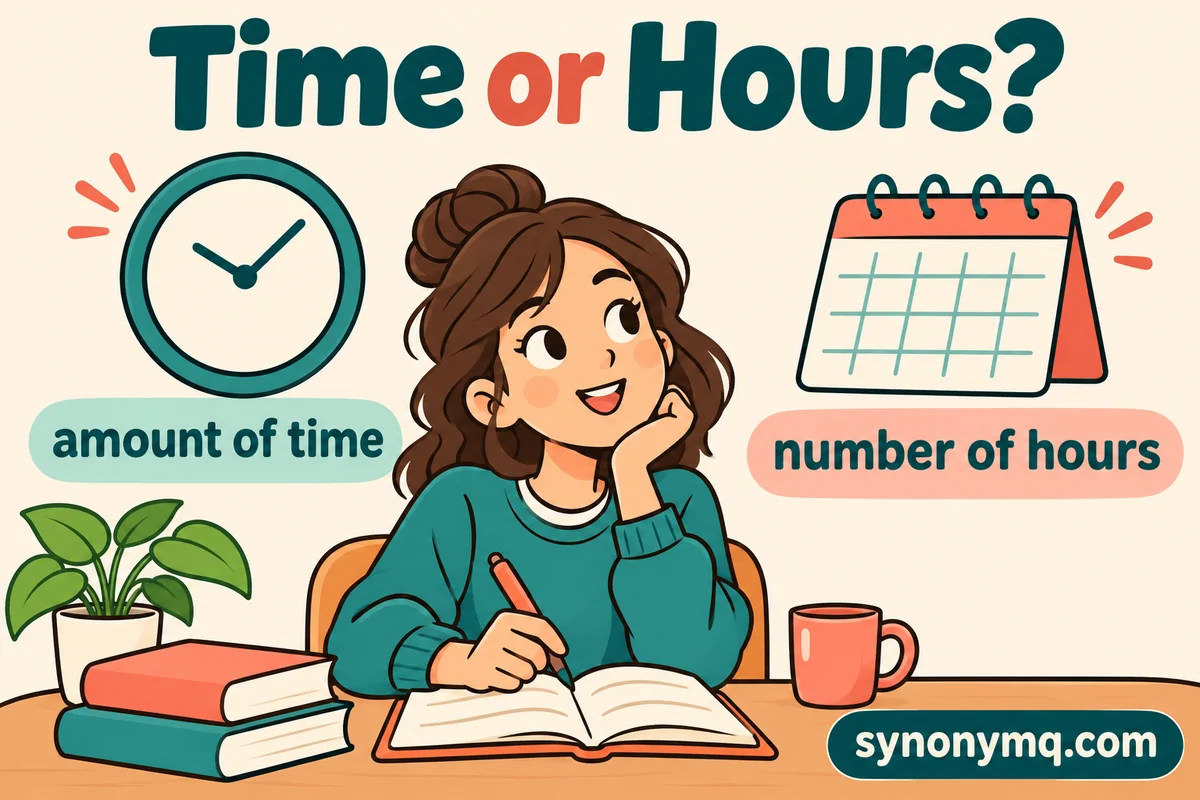
Write amount of time for duration, number of hours for counted hours, and number of times for repeated occasions.
Duration: “We underestimated the amount of time needed to repaint the hall.”
Hours: “Record the number of hours you worked.”
Occasions: “I lost count of the number of times the alarm sounded.”
Changing time to times can change the meaning. “Reduce the amount of time spent checking email” asks for less total checking time. “Reduce the number of times you check email” asks for fewer visits to the inbox.
For a timesheet or formal report, prefer number of hours to amount of hours. For a simple description of duration, you can often write “The repair took four hours.”
3. People or a crowd?
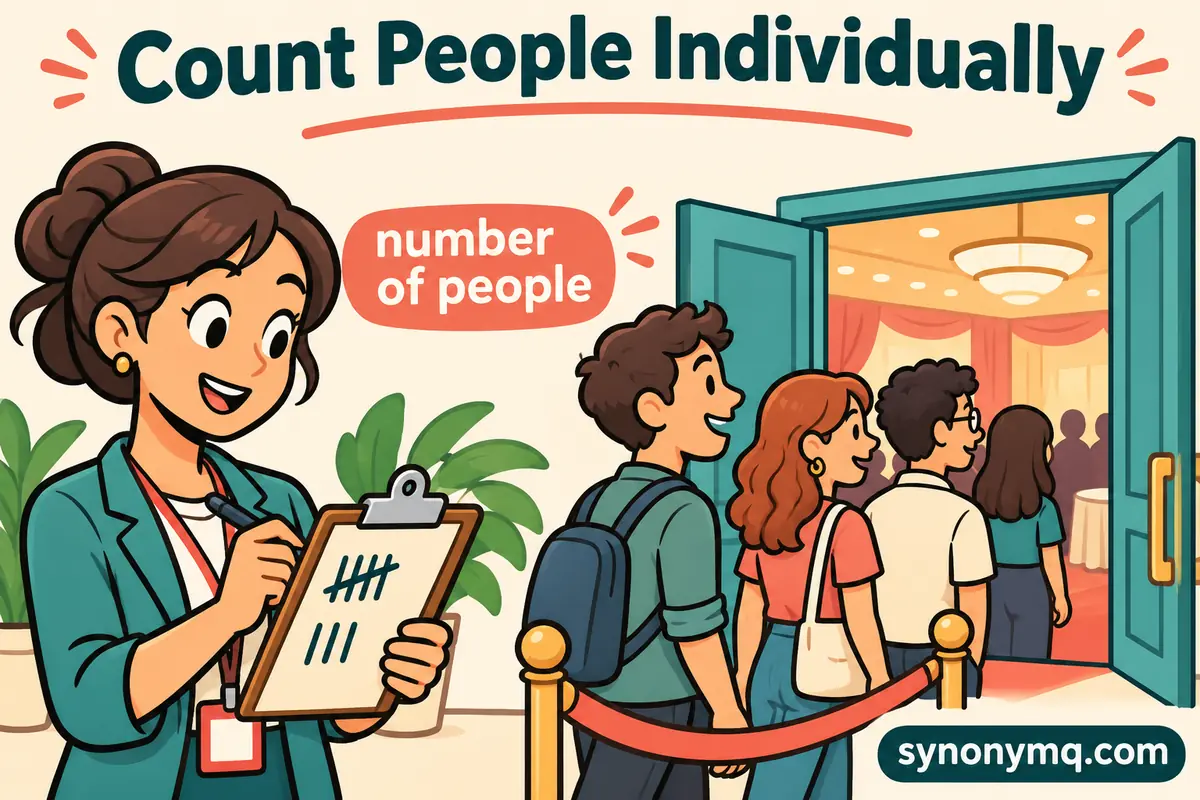
In edited writing, choose number of people. People are individuals you can count: three people, twenty people, a hundred people. A large crowd does not change that grammar.
Before: “We did not expect that amount of people at the workshop.”
After: “We did not expect that number of people at the workshop.”
For less formal wording, “We did not expect so many people” is also natural. Use crowd size if the sentence calls for a compact noun phrase: “Crowd size affected the seating plan.”
Cambridge’s word-choice guidance recommends number of with plural countable nouns, including people.
4. Water or bottles?
Use amount of water for the liquid and number of bottles for its containers. The same delivery can be described either way, but the information is different.
Liquid: “Check the amount of water available for the walk.”
Containers: “Check the number of bottles in the crate.”
A bottle count does not tell you the volume unless you also know each bottle’s size and how full it is. Choose the wording that answers your reader’s practical question.
For a packing list, a count may be enough. For water supply planning, a volume is more useful. “Bring six full one-litre bottles” supplies both pieces of information without an extra explanation.
5. Work, tasks or equipment?
Use amount of work for the workload and number of tasks for separate assignments. Ten tiny jobs may involve less work than one difficult repair.
Workload: “The amount of work increased after the inspection.”
Assignments: “The number of tasks stayed the same.”
Equipment follows the same noun-based rule: amount of equipment, but number of tools or number of pieces of equipment. Adding a countable unit changes the construction.
In a purchase request, name the items when possible. “We need four drills” gives the buyer more useful information than “We need a larger amount of equipment.”
A number of are or the number of is?
A number of often means several, so it normally takes a plural verb. The number of refers to the total count, so it normally takes a singular verb.
| Sentence | Meaning |
|---|---|
| A number of volunteers are waiting outside. | Several volunteers are waiting. |
| The number of volunteers is rising. | The total count is rising. |
| The amount of work is increasing. | The workload is increasing. |
The University of Stellenbosch’s style guide records the distinction between a number of and the number of. Check the full subject rather than copying the verb form beside the nearest noun.
Where quantity fits
Quantity can go with countable or uncountable nouns: a quantity of screws, a quantity of paint. Cambridge Grammar describes it as more formal than amount or number.
It fits an inventory or technical description well. In an ordinary message, amount of paint or number of screws often tells the reader more directly whether you mean a measured supply or individual items.
Do not replace every occurrence of amount with quantity just to vary your vocabulary. “The amount of time available” is already clear.
The link with less and fewer
The same countability distinction usually gives you less money but fewer coins, or less work but fewer tasks.
There is a useful boundary: measurements treated as a total can take less, as in “less than two hours” or “less than ten pounds.” That does not make number of hours incorrect.
Washington State University’s amount/number usage note explains both the usual pattern and the time-and-money exception. Avoid turning the shortcut into a rule that rejects natural measurement phrases.
Practice with answers
Choose amount or number for each gap. Look at the noun immediately after of before you check the answer.
- The ___ of luggage left little room in the car.
- Please confirm the ___ of bags you checked in.
- The ___ of times the screen froze was frustrating.
- We reduced the ___ of time spent waiting.
- The ___ of chairs is written on the delivery note.
- A ___ of volunteers are staying to clean up.
Answers: 1. amount; 2. number; 3. number; 4. amount; 5. number; 6. number.
Luggage and time are uncountable here. Bags, times, chairs and volunteers are countable. In the last sentence, a number of means several; in sentence five, the number of means the total.
For your own sentence, underline the noun after of. If you change that noun, check the choice again. For other pairs whose differences need a separate test, see our guide to commonly confused words.
How this page was checked
The guidance was checked on 12 November 2026 against the Cambridge, BBC, university and dictionary references linked here. The example sentences were written for this guide. Recommendations concern ordinary edited English.
Frequently asked questions
What is the difference between a number and a value?
A number can express a count or measurement. A mathematical value is a result or assigned quantity; for example, x has value 5.
What is the difference between amount and quantity?
Amount normally accompanies an uncountable noun. Quantity can accompany countable or uncountable nouns and sounds more formal, especially in descriptions of materials or stock.
Do you say amount of people or number of people?
Use number of people in edited English because people are countable. For a conversational alternative, write many people or a lot of people.

Naveed Akhtar writes every guide on SynonymQ. He is an SEO content writer with ten years of article-writing experience, working on the question a thesaurus never answers: which of these words belongs in this sentence, for this reader. Every page cites the dictionary entries it draws on and the date they were read.