
Calm vs Peaceful vs Serene: 3 Situations That Separate Them
Calm vs peaceful vs serene depends on context. Calm often describes a steady reaction or undisturbed conditions. Peaceful can mean restful or nonviolent. Serene suggests an untroubled impression. Their meanings overlap.
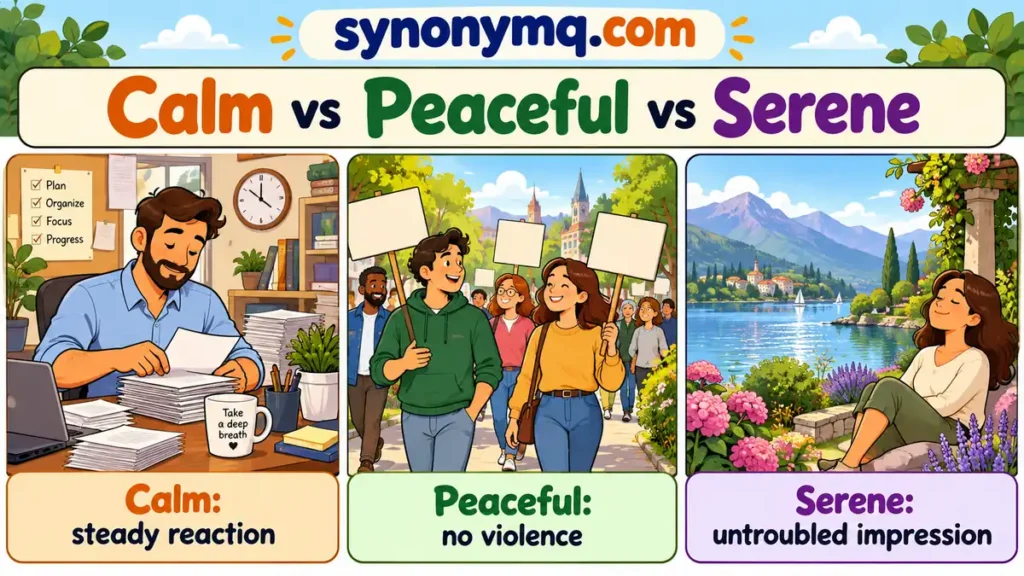
A meeting can be noisy but peaceful. A speaker can stay calm while everyone else argues. A garden can look serene while birds sing nearby. None of these descriptions requires complete silence.
Start with the situation rather than searching for the most impressive word. A reaction, a disagreement, and a landscape give these near-synonyms different jobs.
1. A Calm Reaction in a Busy Situation
The printer stops just before a presentation. Maya checks the cable, asks a colleague for help, and speaks without snapping. Her response is calm, even though the office is hectic.
Oxford’s calm entry includes the absence of nervousness, upset, or excitement. Calm is a useful everyday choice for someone’s voice, manner, or response under pressure.
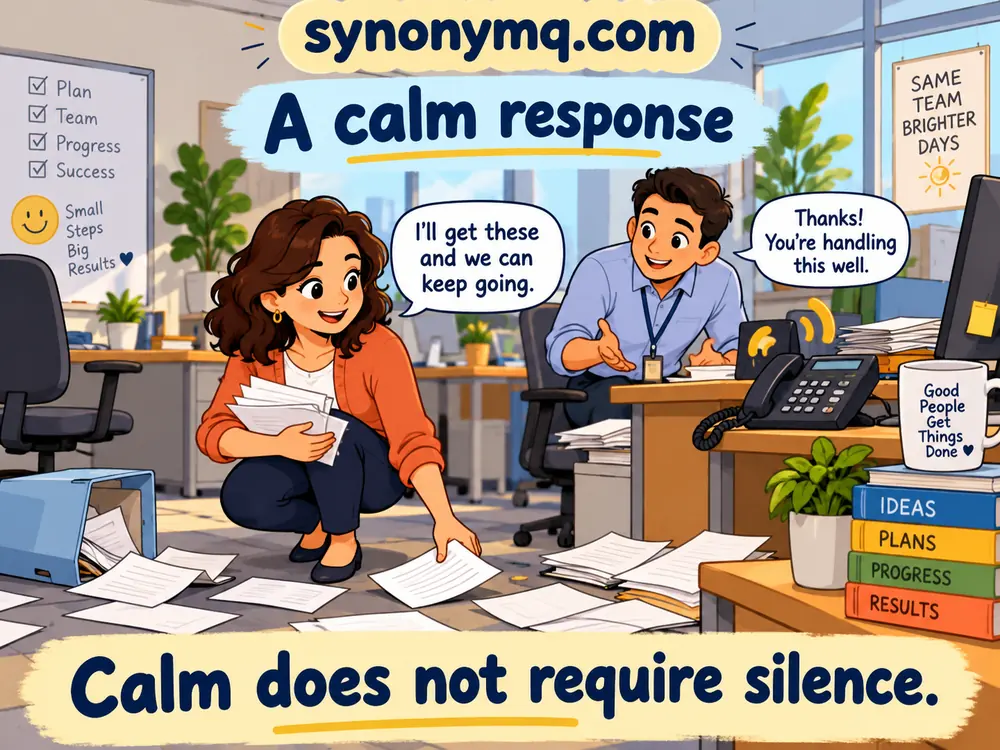
“Maya gave a calm reply” focuses on how she responded. “Maya looked serene” suggests a more broadly untroubled expression. The second sentence does not tell us whether she solved the printer problem.
Calling her reply peaceful would shift attention toward a lack of hostility. It is not the clearest default if your point is that she kept her composure.
Calm also describes physical conditions
Calm is not restricted to emotions. With the sea, it refers to an absence of large waves; with weather, it can refer to an absence of wind. Those are physical descriptions, not claims about anybody’s feelings.
“The water was calm enough to reflect the bridge” describes its surface. “The riverside was peaceful” describes the broader experience of the place. Both may be true, but they answer different questions.
2. A Peaceful Activity Can Still Be Loud
At a community gathering, people chant, applaud, and ask for more trees. If nobody uses violence, peaceful can describe the gathering even when it is loud and energetic.
Oxford separates peaceful’s nonviolent meaning from its restful meaning. That distinction matters in phrases such as peaceful protest, peaceful settlement, and peaceful afternoon.

“The discussion remained calm” describes its emotional temperature. “They reached a peaceful agreement” emphasizes resolving matters without conflict or violence. A calm discussion does not necessarily end in agreement.
Use peaceful when the absence of fighting, hostility, or disturbance is the important point. Serene is usually an odd replacement in a factual description of a protest: it suggests a mood or impression rather than nonviolence.
Peaceful also works for rest and comfort
A peaceful evening might involve gentle conversation, a ticking clock, or music from another room. The sounds do not have to disappear for the experience to feel restful.
“We had a peaceful afternoon” is an ordinary description of an undisturbed time. “We had a serene afternoon” gives the scene a more reflective tone. That tone difference is editorial guidance, not a rule that one form is incorrect.
If your main concern is sound or movement, see quiet versus silent versus still. Those distinctions should not be collapsed into peaceful.
3. A Serene Scene Suggests an Untroubled Impression
Imagine a person reading beside a garden pond. Their expression is relaxed, the water catches the light, and nothing in the scene seems hurried. Serene describes that overall impression well.
Oxford defines serene through calm and peaceful. It can describe people and places, so it is not a word reserved for inner feelings or beautiful landscapes alone.
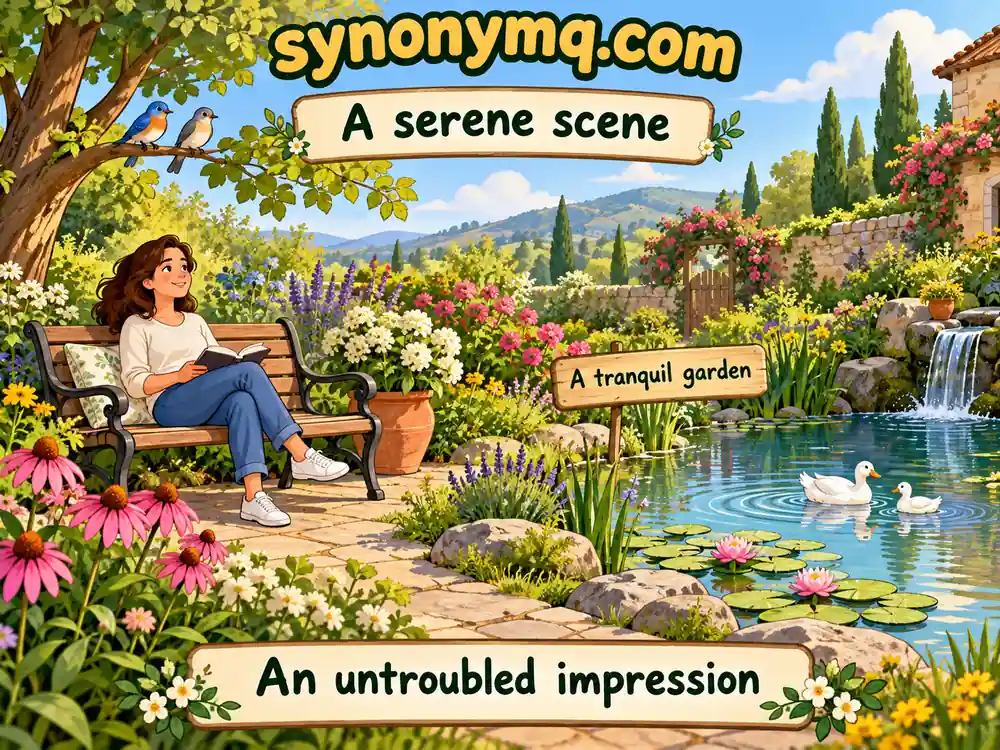
“Her expression was serene” describes how she appeared. It does not prove that she had no worries. In a factual account, avoid turning an observed expression into certainty about someone’s private emotions.
Serene can sound more descriptive or elevated than calm in everyday writing. Use it when that impression helps. For a practical instruction such as “Stay calm while I check,” the simpler word is usually more natural.
Where does tranquil fit?
Merriam-Webster gives tranquil both mental and situational uses: a mind without agitation or a scene without disturbance. A tranquil garden and a tranquil mood are both natural phrases.
Tranquil is a near-synonym of peaceful or serene in restful descriptions. It is not automatically a stronger level. Context determines whether the writer is describing a person, a setting, or the atmosphere between them.
There is no fixed ladder from calm to peaceful to serene. A calm sea can be less dramatic than a stormy one without being less beautiful than a serene lake.
Calm vs Peaceful vs Serene: Test the Whole Sentence
| Original wording | Alternative | Relationship and substitution |
|---|---|---|
| A calm reply | A composed reply | Near-Synonym; Direct Swap when controlled behavior is the point. |
| A peaceful garden | A tranquil garden | Near-Synonym; Direct Swap for a restful, undisturbed setting. |
| A serene expression | A calm expression | Near-Synonym; Direct Swap, with a plainer description. |
| A peaceful protest | A nonviolent protest | Contextual Alternative; Direct Swap when absence of violence is the specific meaning. |
| She felt calm. | She felt a sense of tranquility. | Contextual Alternative; Requires Rewrite. The noun phrase is more elaborate. |
A quiet room is not automatically peaceful: two people can sit silently after an argument. Likewise, someone can feel calm while loud machinery operates nearby. Low sound, low agitation, and lack of conflict are different claims.
The opposite also depends on the context. Agitated contrasts with a calm person; rough contrasts with a calm sea; violent contrasts with a peaceful protest. One antonym cannot cover all three situations.
For more examples of how context changes a replacement, browse the commonly confused words guide.
Calmness, Serenity, and Tranquility: Change the Grammar Too
Calm, peaceful, serene, and tranquil are adjectives in phrases such as “a calm voice” and “a tranquil room.” Calmness, peacefulness, serenity, and tranquility are nouns that name the related qualities or states.
| Form | Example | What it does |
|---|---|---|
| Calm / calmness | His voice was calm. His calmness helped the team. | Adjective versus noun |
| Serene / serenely | She looked serene. She smiled serenely. | Description versus manner of an action |
| Tranquil / tranquility | The courtyard was tranquil. We enjoyed its tranquility. | Adjective versus noun |
| Tranquilly | They sat tranquilly beside the window. | Adverb meaning in a tranquil manner |
Merriam-Webster lists tranquility as the US spelling and tranquillity as chiefly British. Both name the same state. This article uses tranquility consistently.
Calm is also a verb: “Her explanation calmed the audience.” Peaceful is not a verb in ordinary modern usage; write “made the room more peaceful,” not “peaceful the room.”
Peace of mind is a noun phrase for mental ease or reassurance. “Knowing the parcel had arrived gave me peace of mind” is more natural than “gave me a peaceful.” Changing the word sometimes requires rebuilding the sentence.
Frequently Asked Questions
Are serene and calm the same?
They overlap, but calm is broader and often describes reactions or physical conditions. Serene suggests an untroubled appearance or atmosphere. A calm response need not look serene.
What is a classy word for calm?
Serene or tranquil may suit descriptive writing; composed suits controlled behavior. None is automatically better than calm. Choose the word that fits the subject and the tone you need.
What is the difference between serene and peaceful?
Serene emphasizes an untroubled impression. Peaceful can describe restfulness or the absence of conflict and violence. A peaceful protest may be energetic and noisy, so serene is not always a suitable replacement.
Is there a difference between calm and peaceful?
Yes. Calm often describes low agitation or undisturbed physical conditions. Peaceful can mean restful or nonviolent. A calm person may be in a noisy place; a peaceful gathering need not be quiet.

Naveed Akhtar writes every guide on SynonymQ. He is an SEO content writer with ten years of article-writing experience, working on the question a thesaurus never answers: which of these words belongs in this sentence, for this reader. Every page cites the dictionary entries it draws on and the date they were read.