
Process vs Procedure: 4 Choices for Clearer Sentences
Process vs procedure is a choice of emphasis: a process is a sequence of actions or changes; a procedure is an established way of doing something. Use process for what unfolds and procedure for the method people are expected to follow.
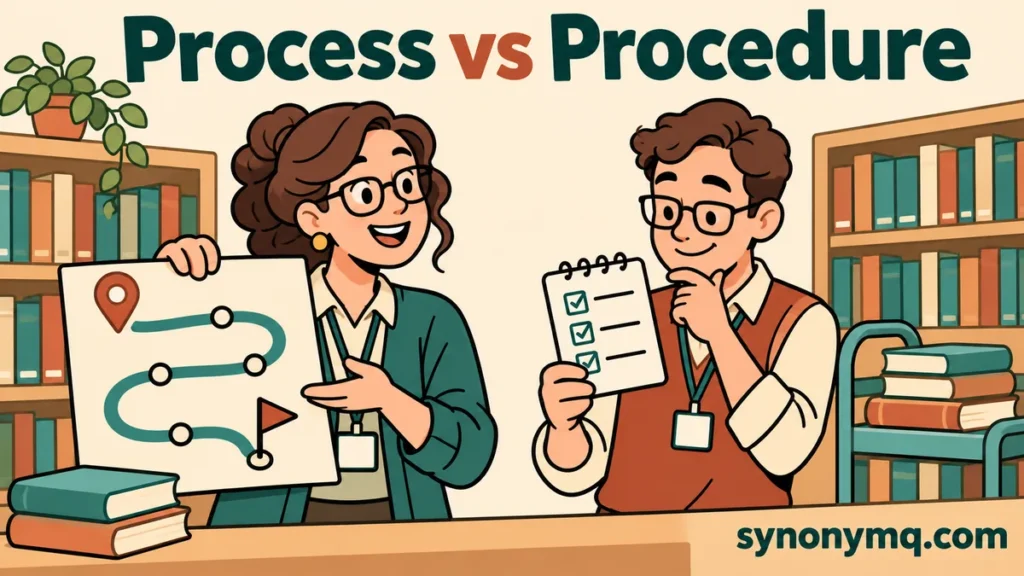
Process vs procedure in 4 sentence choices
A library manager says, “Our returns process is slow.” A colleague replies, “Everyone follows the procedure.” Both statements can be true: staff may follow the agreed method while books still take too long to reach the shelves.
The difference between a process and a procedure helps identify what the manager wants to discuss. Is the problem the whole sequence, or the way someone performs an activity within it?
1. Name the sequence that leads to a result
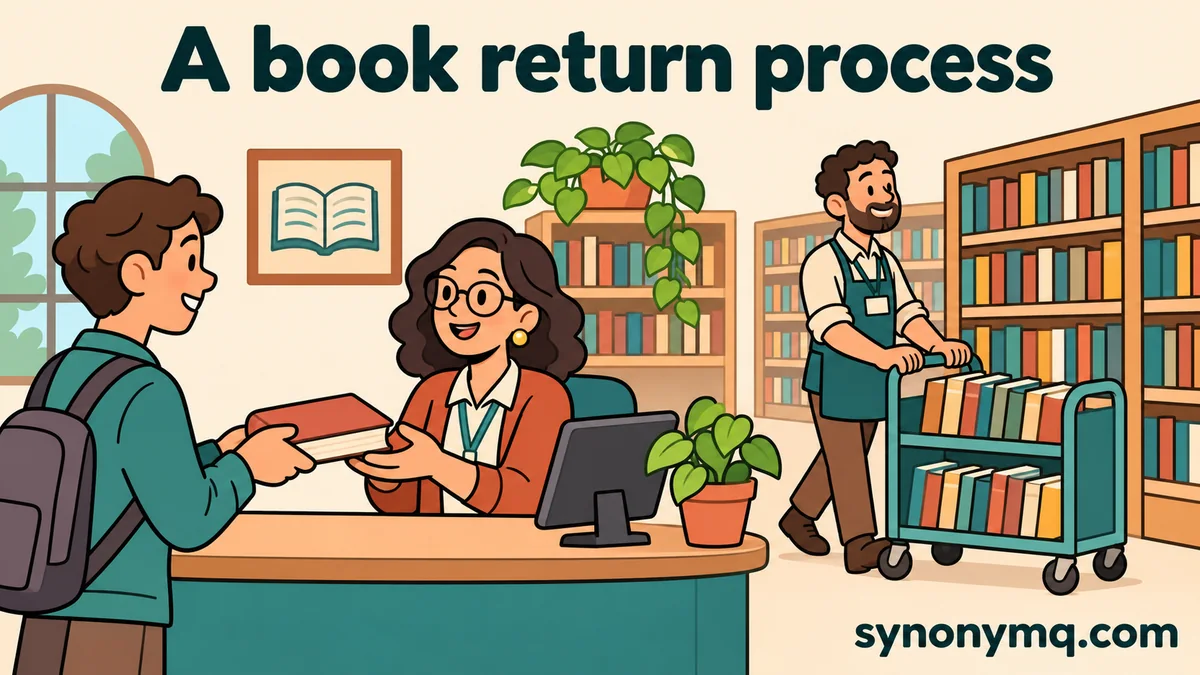
Choose process when you are describing connected activity leading to a result. In our library example, the book moves from the borrower to the returns desk, through checking, and back to a shelf.
Cambridge’s process entry covers actions leading to a result as well as changes that occur naturally. The word does not, by itself, tell you whether the activity is efficient or well organized.
“We shortened the returns process” suggests that the sequence now takes less time or involves less work. It does not explain which instruction changed. If that detail matters, name the stage that was removed or improved.
A process can be familiar without being formally described. Do not assume that calling an activity a process means someone has already drawn a flowchart or written a manual.
2. Name the established way of doing it
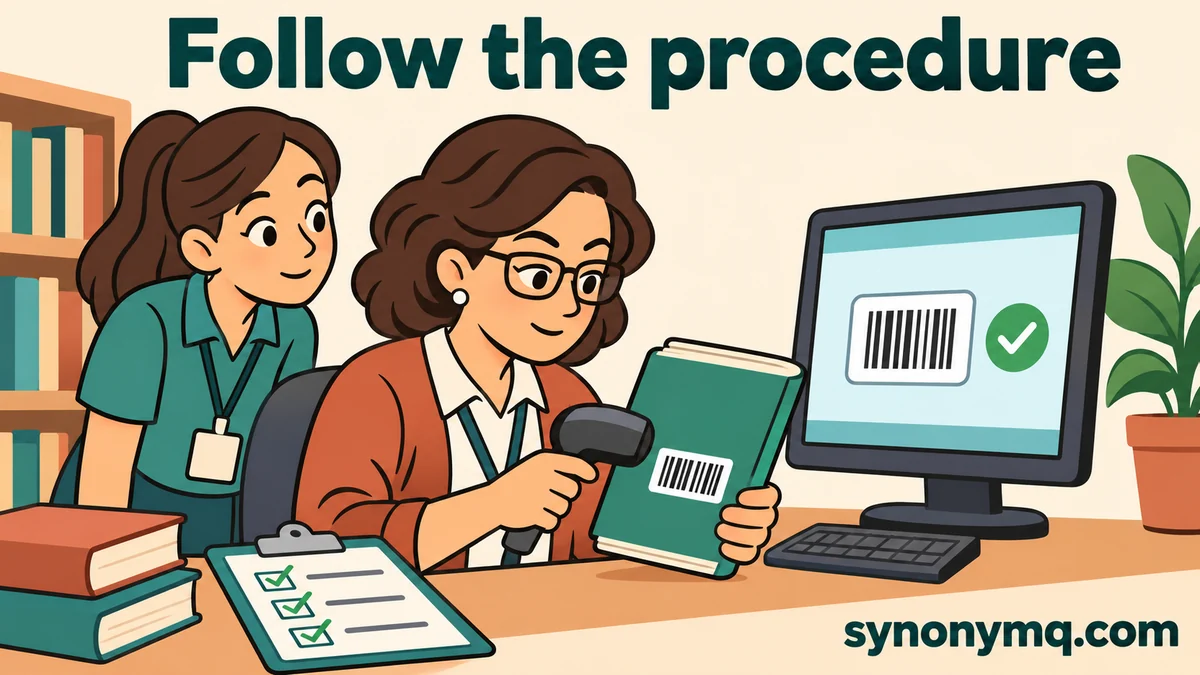
Choose procedure when your point is the accepted or specified way to carry out an activity. “Follow the returns procedure” directs staff toward a method they are expected to use.
Cambridge defines procedure around an official or accepted way of doing something. Its wider meanings also include medical operations and computing instructions; those specialized uses need their own context.
The everyday procedure meaning is not simply “a document.” A team can have an established way of working before it writes that way down. A documented procedure records the method so others can consult it.
“We changed the returns procedure” emphasizes a changed method. Perhaps staff now check the book’s identity before closing its loan record. That change may improve the wider process, but the two sentences focus on different things.
3. Describe a change that happens naturally
Use process for a sequence of natural changes. A plant developing new leaves is undergoing a process; it is not following a procedure. Procedure would suggest an instructed or established way of acting.
At the library window, plant growth is a natural process. The staff’s agreed watering routine is a procedure. Human care can affect the plant without turning its growth into a set of instructions.
This is where the shortcut “process means what; procedure means how” becomes too narrow. It can help organize workplace documents, but it does not explain every ordinary use of either word.

4. Ask for instructions when the label is not enough
When a new assistant needs practical help, “Explain the process” might invite a broad overview. “Show me the procedure” points toward the established method. Neither request specifies how much detail the assistant needs.
A clearer request is: “Show me how to check in this returned book, including what to do if its barcode will not scan.” It identifies the activity and the difficulty instead of relying entirely on a label.
Use process or procedure when the distinction helps. When someone needs to act, add the task, the expected result and any relevant exception. Clear instructions matter more than winning an argument about the document’s name.
One book return, two different descriptions
Here is a fictional example of process and procedure. The library’s returns process begins when a borrower hands over a book and ends when the book is available in its proper place.
Within that sequence, a checking procedure might tell an assistant to scan the barcode, match the displayed title to the book, confirm the return and place the item on the reshelving cart.
If the scanner fails, the assistant needs the library’s agreed exception instructions. This example illustrates wording; it is not a universal library operating standard.
| Original sentence | Possible wording | Relationship and effect |
|---|---|---|
| The returns process takes too long. | The returns procedure takes too long. | Near-Synonym · Direct Swap grammatically; shifts attention toward the established method. |
| We revised the checking procedure. | We revised the checking method. | Near-Synonym · Direct Swap here; method does not stress official acceptance as strongly. |
| Please explain the procedure. | Please show me how to check in this book. | Contextual Alternative · Requires Rewrite; asks for a demonstration of the specific task. |
A direct swap can produce a natural sentence without preserving every implication. Compare the intended message before deciding that two words are interchangeable.
Where policy and work instructions fit
In workplace documentation, processes and procedures often sit alongside policies and work instructions. These labels help organize information, but a local handbook may draw their boundaries differently.
Oracle’s documentation guide presents policy as setting direction, process as the broad steps and procedure as the detail needed to carry them out. Treat this as a workplace model.
For a policy vs procedure comparison, ask whether the text states a governing rule or explains how to act. “Only authorized staff may amend loan records” is a fictional policy; instructions for making an approved correction describe a procedure.
A work instruction commonly narrows the explanation to a particular task, such as the controls used to find a loan record. Do not assume every organization separates that detail into another document.
“Established” also does not mean “proven best.” A familiar procedure may still need improvement. See SynonymQ’s guide to alternatives to best practice when you need to describe what the evidence actually supports.
How this comparison was checked
Cambridge supports the core meanings and the comparison with method. Oracle supplies a workplace-documentation example; the EPA’s SOP guidance supports the FAQ below.
The library scenes and sentence rewrites are original fictional examples. Recommendations about which wording best fits those scenes are editorial judgments, not universal rules for every organization.
Frequently asked questions
What is the difference between process and procedure?
A process describes connected actions or changes; a procedure describes an established way of doing something. Their meanings overlap, particularly in workplace contexts.
What is the difference between steps and processes?
A step is an individual action or stage. A process connects actions or changes into a sequence; one step does not usually describe the whole process.
What is the difference between method and procedure?
A method is a way of doing something. A procedure often emphasizes an accepted or specified method, though the words overlap in ordinary use.
Is SOP a process or procedure?
SOP means standard operating procedure. It documents instructions for routine activity; it can explain how to carry out a process or part of one.

Naveed Akhtar writes every guide on SynonymQ. He is an SEO content writer with ten years of article-writing experience, working on the question a thesaurus never answers: which of these words belongs in this sentence, for this reader. Every page cites the dictionary entries it draws on and the date they were read.