
Sad vs Unhappy vs Miserable: 3 Differences That Matter
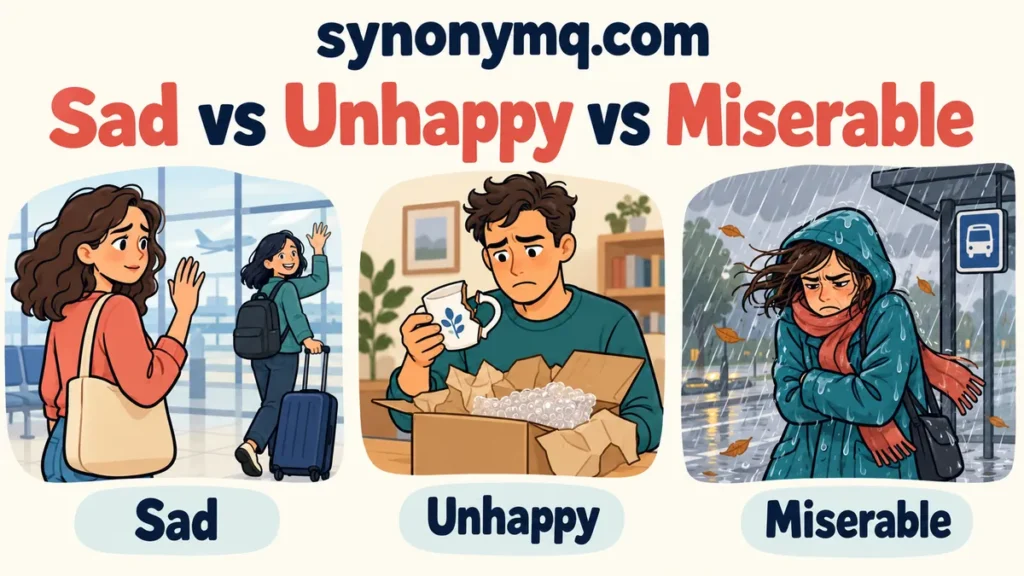
Sad vs unhappy vs miserable is a choice about meaning, not just strength. Sad describes sorrow; unhappy can describe sorrow or dissatisfaction; miserable suggests great unhappiness or discomfort. Choose by situation before choosing by strength.
Sad vs Unhappy vs Miserable at a Glance
A farewell, a faulty order and a wet journey can all leave someone feeling bad. The useful question is what the sentence needs to describe: sorrow, dissatisfaction or a thoroughly unpleasant experience.
| Word | Main use here | Original example | Important limit |
|---|---|---|---|
| Sad | Feeling or expressing sorrow | The empty classroom made Omar feel sad. | Sadness can be mild or intense. |
| Unhappy | Sad, or not satisfied with something | Omar was unhappy with the replacement desk. | Dissatisfaction does not necessarily mean sorrow. |
| Miserable | Very unhappy or uncomfortable | Omar felt miserable in his wet clothes. | Discomfort can be physical as well as emotional. |
The same person could use all three words on the same day. That does not make them interchangeable in every sentence: the surrounding noun, preposition and situation help establish the meaning.
1. Sad Describes the Feeling, Without Fixing Its Strength
Sad is a straightforward word for sorrow. It fits a quiet farewell, an upsetting memory or a painful loss. It can also describe something that produces the feeling, such as a sad story or sad news.
Collins explains that sad can range from mild unhappiness to intense grief. A chart that always places sad below unhappy would therefore be misleading.
Consider “Maya felt sad when the community library closed.” The sentence names her feeling without measuring it. “Maya felt deeply sad” adds intensity while keeping the same ordinary adjective.
Direct Swap: “Maya felt sad after the farewell.” → “Maya felt unhappy after the farewell.”
Sad and unhappy are Near-Synonyms in this sentence. Both describe an unpleasant feeling after saying goodbye. Sad points more clearly toward sorrow; unhappy leaves room for a broader negative reaction.
When writing about loss, choose words that fit what you actually know. The comparison of grief, sorrow and sadness explores that more specific vocabulary.
2. Unhappy Can Describe Dissatisfaction
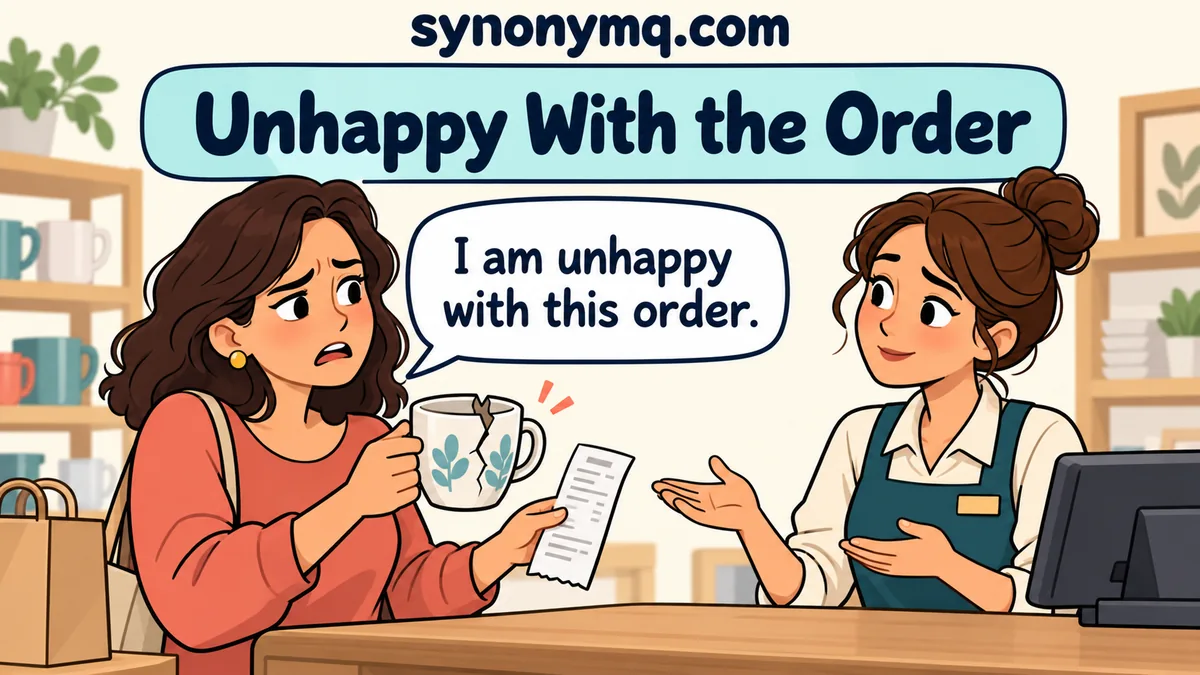
Unhappy is useful when something does not meet your wishes or standards. “I’m unhappy with the repair” can be a complaint about loose screws or poor paintwork. It need not mean the speaker feels sorrowful.
Oxford Learner’s Dictionaries gives unhappy a dissatisfied sense and records the pattern unhappy with somebody or something. The object of with tells the reader what is unsatisfactory.
Compare “I’m sad the shop is closing” with “I’m unhappy with the shop’s service.” The first describes sorrow about an event; the second expresses dissatisfaction. Changing the adjective can change the point of the sentence.
Make a complaint specific
Requires Rewrite: “I’m unhappy.” → “I’m unhappy with the repair because the door still sticks.”
The rewrite adds a problem the reader can understand and address. Use it only when those facts are true. In a complaint, identifying the fault often helps more than replacing unhappy with miserable.
A customer can be dissatisfied without being rude or angry. Likewise, an unhappy customer is not necessarily an unhappy person in every part of life. Keep the description tied to the situation.
3. Miserable Can Mean Uncomfortable as Well as Unhappy
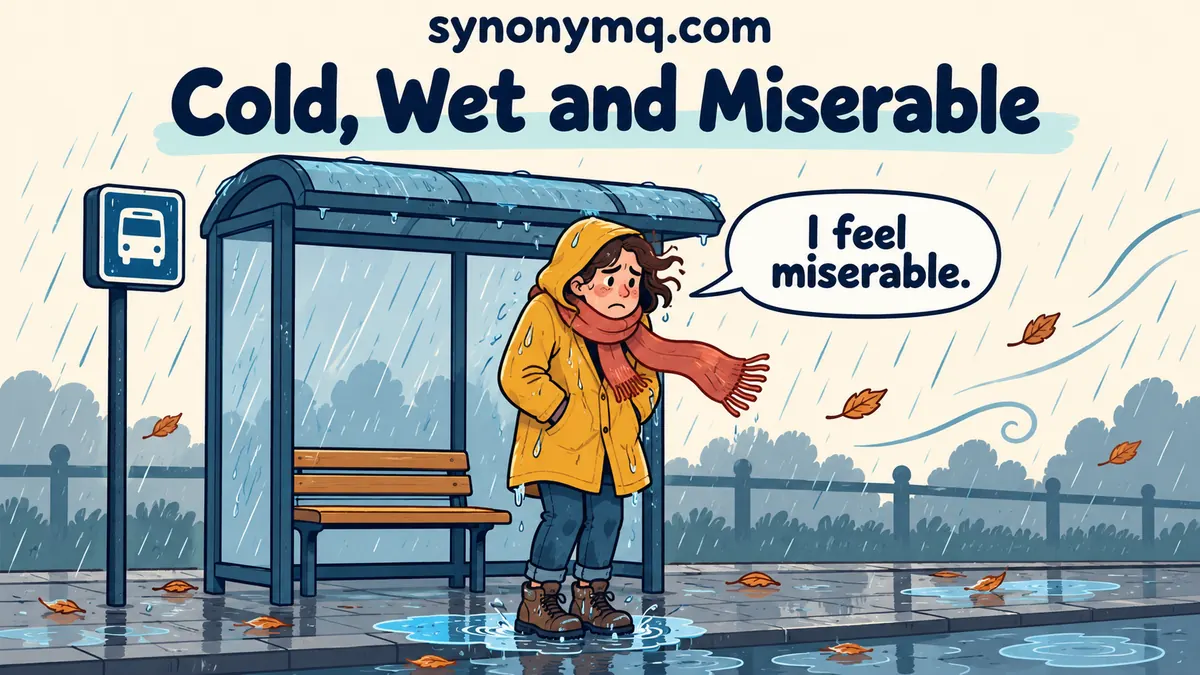
Miserable is a stronger emotional description than simply unhappy, but emotion is not its only use. Cold, wet clothes or an unpleasant journey can make someone feel miserable too.
Oxford defines miserable in terms of great unhappiness or discomfort. That explains why it works in both “She felt miserable after the argument” and “We were miserable in the freezing rain.”
In the rain example, “We were sad” would not clearly communicate the cold and discomfort. Use miserable when the whole experience feels unpleasant; add specific details if the reader needs to know why.
The noun can change the meaning
A miserable afternoon might be emotionally painful, physically uncomfortable or both. Miserable weather describes unpleasant conditions. Neither phrase requires the weather or the afternoon to have feelings.
Be careful with “a miserable person.” Oxford also records a disapproving use for someone who seems habitually unfriendly or bad-tempered. “She feels miserable today” describes a present state more clearly.
Miserable can also criticize a small amount: “They offered a miserable five coins for the collection.” Here it means disappointingly little, not sorrowful. Sad and unhappy are not direct replacements in that use.
Choose a Replacement for the Sentence You Have
A synonym for unhappy depends on the intended meaning. Sad fits sorrow, dissatisfied fits a complaint, and miserable makes strong unhappiness explicit. The alternatives below have limits; none works everywhere.
| Alternative | Relationship | Original → replacement | Operation and meaning change |
|---|---|---|---|
| Unhappy | Near-Synonym of sad | a sad visitor → an unhappy visitor | Swap With Adjustment. Change a to an. The description becomes broader than sorrow alone. |
| Dissatisfied | Near-Synonym of unhappy in complaints | We are unhappy with the repair. → We are dissatisfied with the repair. | Direct Swap. Makes lack of satisfaction explicit; suits a clear complaint. |
| Miserable | Near-Synonym of unhappy in emotional descriptions | He felt unhappy after the argument. → He felt miserable after the argument. | Direct Swap. Strengthens the description. Avoid it if you mean only mild unhappiness. |
| Wretched | Near-Synonym of miserable | She felt miserable in the cold. → She felt wretched in the cold. | Direct Swap. Keeps a strong sense of discomfort; use only when that strength is intended. |
| Disappointed | Contextual Alternative | I’m unhappy that the concert was cancelled. → I’m disappointed that the concert was cancelled. | Direct Swap. Adds an expectation or hope that was not met. |
| Upset | Contextual Alternative | She was sad about the message. → She was upset about the message. | Direct Swap. Allows worry or anger as well as unhappiness; less specific about sorrow. |
Oxford connects disappointed with an unmet hope or expectation. Someone who misses a promised visit may be both sad and disappointed, but disappointed supplies that extra reason.
Do not choose wretched simply to make a routine complaint sound impressive. “I’m dissatisfied with the delivery time” is more precise when the issue is service. Stronger vocabulary can exaggerate what you mean.
Sadness, Unhappiness and Misery Are Nouns
Sadness names the feeling described by sad. Unhappiness names a state of being unhappy; misery can name great unhappiness or suffering. These are Related Words, not adjective replacements in the same grammatical slot.
Requires Rewrite: “The farewell made her sad.” → “She felt sadness at the farewell.”
The rewrite changes the sentence structure to use a noun. “The farewell made her sadness” does not work. Keep the adjective version when it says what you mean more simply.
Merriam-Webster records misery as a state of great unhappiness or suffering. Compare “The wait made us miserable” with “The long, wet wait added to our misery.” The second sentence names the experience itself.
Sad or Mad? Sorrow and Anger Are Different
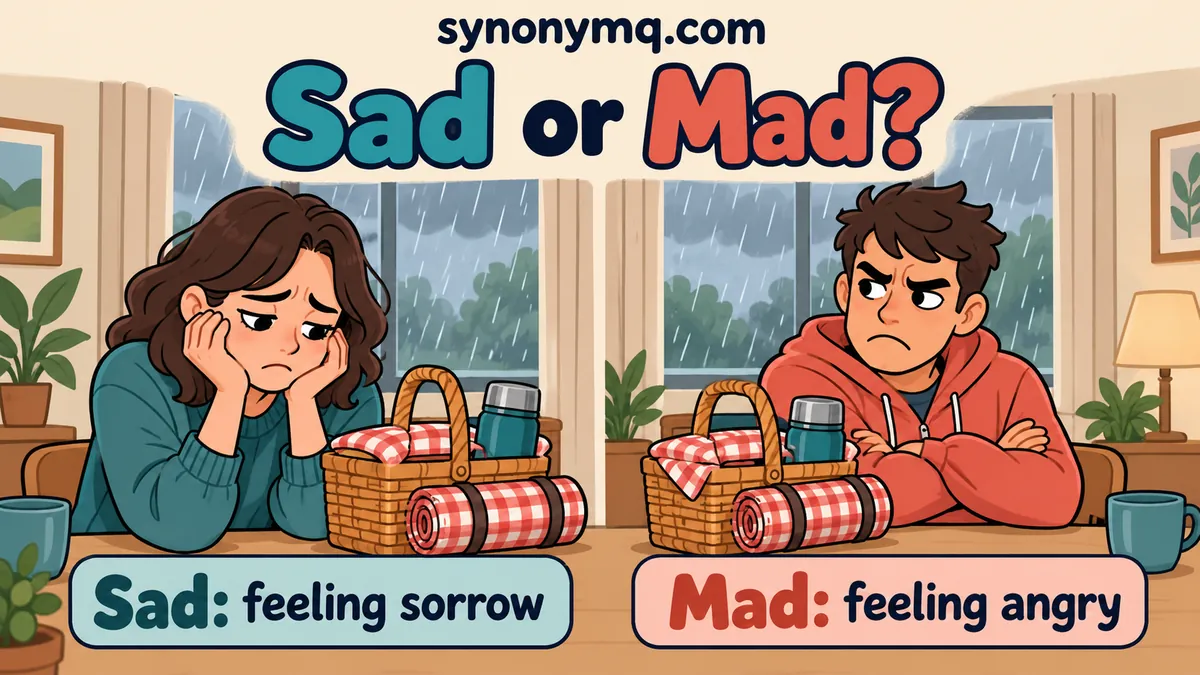
Sad describes sorrow; mad can mean angry. A person might feel sad that a picnic was cancelled, mad that nobody told them, or both. The cause alone does not tell you which feeling they have.
Oxford’s American dictionary labels mad meaning angry as informal. For a global audience, angry states that meaning directly. Mad is a Related Word here, not a synonym of sad.
“I’m unhappy about the cancellation” leaves the reaction broader. “I’m disappointed” highlights the failed expectation. “I’m angry” names anger. These choices give the reader different information about the same event.
How This Page Was Checked
Meanings and usage patterns were checked against Collins, Oxford Learner’s Dictionaries and Merriam-Webster. The examples are original; the recommendations apply those definitions to particular sentences.
Additional references support dissatisfied, wretched and upset. This is a vocabulary comparison, not a scale for measuring a person’s emotional health.
Frequently Asked Questions
What is the difference between unhappy and miserable?
Unhappy can mean sad or dissatisfied. Miserable usually suggests stronger unhappiness and can also describe physical discomfort, such as feeling cold and wet.
What are the 7 habits of unhappy people?
Unhappy is a description, not a seven-habit personality category. The word alone cannot tell you someone’s routines or why they feel that way.
What to say to a miserable person?
Try: “Would you like to talk, or would you prefer some company?” Describe their situation kindly instead of using miserable as a label for their personality.
Is misery an emotion?
In ordinary English, misery names a state of great unhappiness or suffering. It can include emotional distress or physical discomfort; it is broader than a single momentary feeling.

Naveed Akhtar writes every guide on SynonymQ. He is an SEO content writer with ten years of article-writing experience, working on the question a thesaurus never answers: which of these words belongs in this sentence, for this reader. Every page cites the dictionary entries it draws on and the date they were read.